
 Français
 Español
 Deutsch
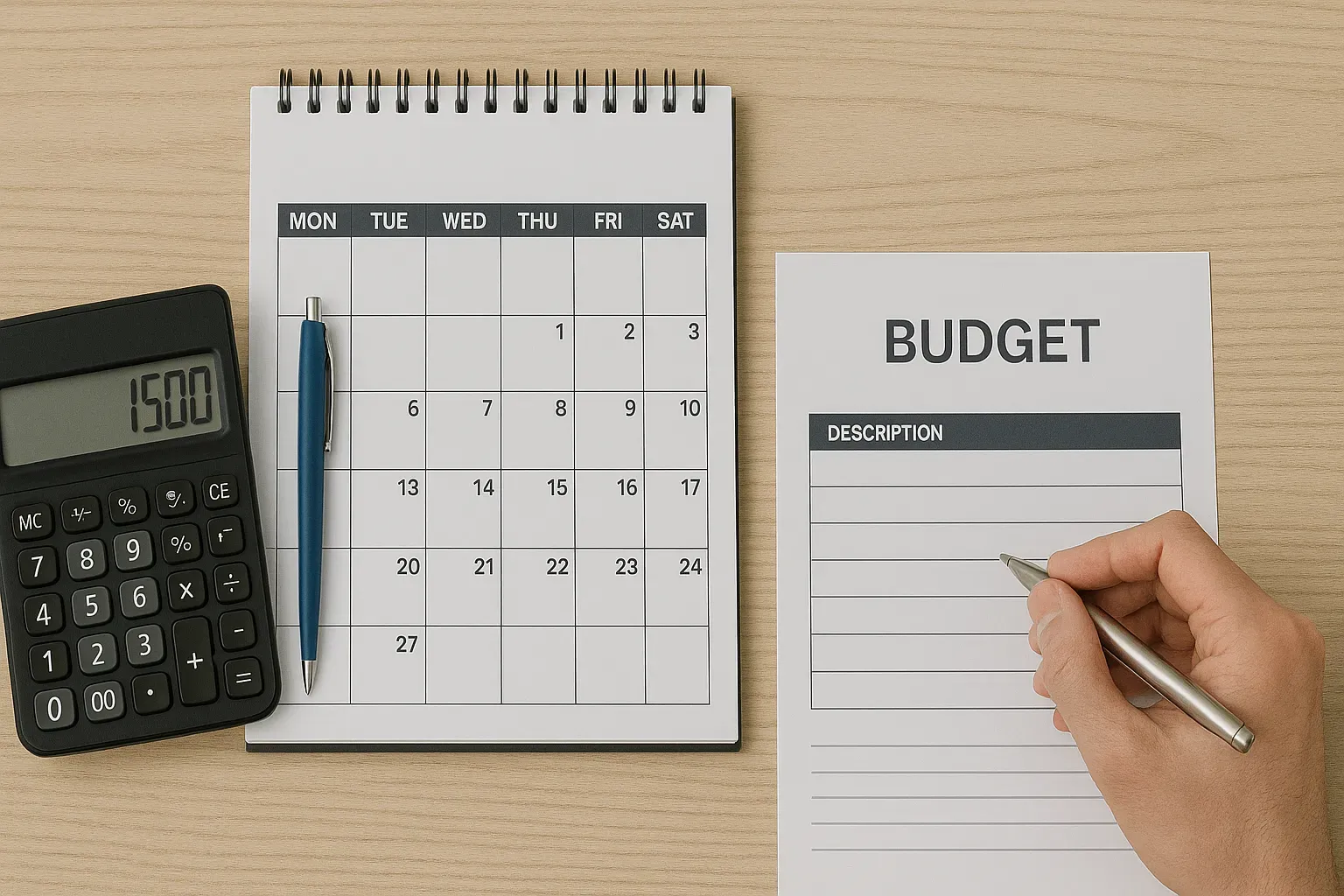
Promotional items are powerful and measurable marketing tools, but their effectiveness depends on a well-thought-out strategy—especially in terms of budget and annual planning. Whether you are a marketing manager, buyer, or event organizer, determining how much to invest in promotional items and how many promotional items to use is a central question to maximize their return on investment (ROI) while controlling your costs.
This guide helps you define a coherent budget, plan at the right time, and optimize your investments according to your marketing goals.
Why anticipate your promotional items budget?
A well-anticipated budget allows you to:
-
Avoid additional costs related to urgent orders.
-
Negotiate better rates with suppliers.
-
Allocate resources at the most strategic times of the year.
Many companies still neglect the planning of their marketing goodies, leading to hasty choices that are not well aligned with the overall brand strategy.
Keep in mind: Integrating promotional items into the marketing calendar allows for better coordination with overall communication campaigns.
When to plan your promotional items budget?
Annually: set a global envelope
When constructing your annual marketing budget, reserve a specific line for promotional items. This allows you to:
-
Smooth expenses over the year.
-
Plan your seasonal or event actions.
-
Anticipate production and delivery times.
Quarterly: adjust based on key events
Integrating promotional items into your events (fairs, launches, commercial operations) requires anticipating 2 to 3 months in advance.
Before campaigns: coordinate with digital and field actions
Synchronizing your goodies with digital highlights (emailing, social networks, ad campaigns) improves the coherence of your omnichannel marketing plan.
How much to invest according to the size of your company?
The budget dedicated to promotional items depends on your profile and goals. Here are some practical guidelines:
|
Type of company |
Recommended annual budget (€) |
Percentage of the marketing budget |
|
Very small business / Micro-business |
500 to 2,000 |
5 to 10% |
|
SME |
2,000 to 15,000 |
3 to 7% |
|
Large company / Group |
15,000 to 100,000+ |
1 to 5% |
The right budget is not the one that is high, but the one that is consistent with your marketing goals and targets.
Distributing your budget: promotional items vs other media
Finding the right balance
In an overall media plan, the promotional item complements:
-
Digital communication
-
Event management
-
Print communication
A balanced budget increases brand recall through physical and durable media.
The cost per contact is lower than you think
Promotional items have the advantage of a low cost per impression: a pen or a mug can generate hundreds of views throughout its lifecycle.
Adapting the budget to periods of economic tension
In times of uncertainty or budget constraints, it can be tempting to eliminate promotional items. However, they can become a profitable economic lever, provided you:
-
Reduce volume but focus on useful products.
-
Precisely target recipients.
-
Focus on items with high perceived value.
Example: A branded down jacket distributed during an internal seminar costs more per unit, but its impact in terms of employee engagement is significant.
How to estimate your needs? A 4-step methodology
1. Define your objectives
-
Awareness: distribute in volume at trade shows, fairs, open houses.
-
Loyalty: offer premium items to your best clients.
-
Acquisition: encourage action through a gift in exchange for a subscription.
2. Identify your targets
-
Partners
-
Existing clients
-
Prospects
-
Internal employees
3. Determine distribution occasions
List key moments:
-
Product launches
-
Trade shows
-
End-of-year celebrations
-
Welcome pack for new employees
4. Select suitable products
Product Area:
-
Personalized mug for visibility in the office.
-
Eco-friendly bottle for CSR events.
-
Backpack for your traveling salespeople.
-
Notebooks for training or internal workshops.
Early orders: a source of savings
Ordering early allows you to:
-
Avoid express production fees.
-
Benefit from sliding scale pricing.
-
Ensure the availability of certain customized items.
Recommended lead time: 6 to 8 weeks before the distribution date.
How to avoid common budget errors?
-
Do not centralize orders within marketing.
-
Forget to include delivery and storage fees.
-
Overestimate volume needs.
-
Neglect returns and reverse logistics (defective items, surplus).
Examples of budget allocation according to the objective
|
Objective |
Type of product |
Recommended budget share |
|
Awareness |
Pens, tote bags, t-shirts |
40% |
|
Loyalty |
Lunch box, down jacket |
30% |
|
Acquisition |
Bottles, notebooks |
20% |
|
Internal / onboarding |
Caps, backpacks |
10% |
Call to Action: Need an optimized budget for your promotional items?
At Vegea, we support professionals in defining a profitable and personalized promotional items strategy. Whether you need a trade show pack, a welcome kit, or a series of goodies for your annual campaign, we help you manage your budget and maximize your impact.
Contact our experts for a personalized quote and advice tailored to your business.
